I Will Teach You to Be Rich Book Review: What Is It Really About?
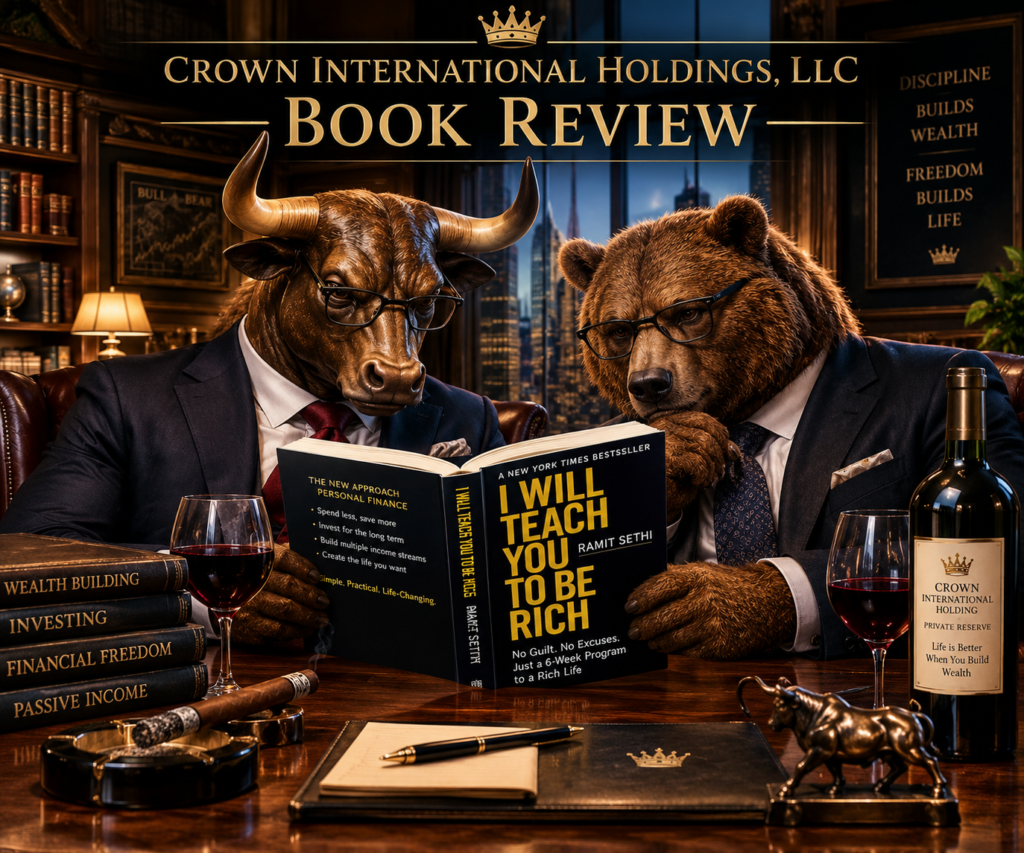
I Will Teach You to Be Rich Book Review: What Is It Really About?
At its core, this is not a typical personal finance book filled with guilt trips about your daily latte or complex theories about market timing. Instead, I Will Teach You to Be Rich is a psychological permission slip for a generation that feels stuck between wanting to enjoy life and knowing they should save for the future. Author Ramit Sethi uses the lens of behavioral psychology to diagnose why most people fail at personal finance and how to build a system for wealth that actually works with your life .
The book explores a series of unconventional questions that have challenged budgeters for decades:
- Why does traditional advice about cutting out coffee and clipping coupons so often lead to failure?
- Why do most people feel guilty every time they spend money on something they love?
- How is managing your finances structurally similar to running a business?
- What is the real connection between long-term wealth and automation, rather than willpower?
The central argument is that conventional wisdom about personal finance is not just boring, but frequently wrong. Sethi argues that the fatal assumption—the “Guilt Myth”—is that getting rich requires deprivation, extreme frugality, and becoming a financial expert. The truth requires looking past what everyone assumes to be obvious and building a system that works for your “Rich Life” .
The Core Philosophy: A New Framework
A key framework in the book is the concept of “Conscious Spending” versus budgeting. Sethi argues that most people are paralyzed by the idea of tracking every penny, leading them to give up entirely. Instead of a restrictive budget, he champions a plan that lets you spend extravagantly on the things you love and cut costs mercilessly on the things you don’t . This ties directly into identifying your “Money Dials”—the specific areas like travel, convenience, or health that genuinely bring you joy . It is the ultimate “stop feeling bad about your money” read, and its biggest strength lies in its ability to make you question your daily financial habits and redefine what wealth actually means to you.
The Key Takeaways: Why Readers Love It
Readers consistently praise this book for making complex financial concepts highly accessible. Sethi masterfully turns abstract strategy into a gripping narrative about freedom and control. For many, the most thought-provoking concept is the “85% Solution”—the idea that getting started with a good-enough plan is far more effective than waiting for the perfect one . The six-week program provides a clear, no-nonsense action plan covering everything from optimizing credit cards and bank accounts to automating your investments . As Sethi famously states, you can set up a system to “save while sleeping” . It is full of eye-opening insights that challenge your approach to money and keep you re-evaluating your spending habits, all while promoting a guilt-free mindset .
The Controversy: Does It Overreach?
However, no balanced review of I Will Teach You to Be Rich would be complete without addressing the criticism. While the book is incredibly popular, it has faced significant backlash from some financial thinkers and readers .
The most common critique is that Sethi’s advice, while practical, is often too basic for anyone with even a moderate understanding of personal finance. Some readers find the book’s tone repetitive or overly reliant on testimonials and marketing fluff . Furthermore, critics argue that the advice can feel one-size-fits-all. For example, his stance on renting versus buying a home is frequently cited as a generalization that doesn’t hold true in all markets . Others point out that the examples often involve high-income earners, making the strategies feel less applicable to those with significant debt or lower wages .
In short, I Will Teach You to Be Rich is a brilliant thought experiment in behavioral finance, but it is not a one-size-fits-all tactical manual. It offers a powerful, provocative hypothesis on how to live a rich life, but often presents its system-first approach as the definitive solution. For the best experience, read it as a transformative conversation starter about your financial potential and a practical push to automate your system, rather than an infallible step-by-step guide for every financial situation.
The Final Verdict: Our “Data Dollars” Rating
To give you a clear takeaway, we are rating this book using a currency that fits its theme: Data Dollars. This rating measures the return on your reading investment—how much time and mental energy you can potentially reclaim for your effort.
(Four out of Five Data Dollars)

Rating Meaning: A High-Return Investment in Financial Empowerment.
Why: You get a massive payout in terms of mindset shift and actionable clarity. It will genuinely change the way you view your relationship with money and your ability to build wealth without guilt. However, you do not get the “full hour” because the book sometimes prioritizes its motivational narrative over deep dives into complex investing strategies or addressing nuanced financial situations. It is a high-yield investment—but one you should manage with your own practical judgment and adapt to your unique financial context .
Final Thoughts: Should You Read It?
Absolutely. If you are looking for an engaging, thought-provoking read that challenges the status quo of personal finance, I Will Teach You to Be Rich is essential. It is particularly valuable for young professionals and new graduates wanting to avoid common financial pitfalls, or for anyone feeling trapped by guilt and a lack of a clear, simple system. Just remember to approach its one-size-fits-all solutions with a healthy dose of your own life experience. It is not the final word on financial management, but it is one of the most eye-opening and motivational starting points you will ever find to design and fund your own “Rich Life” .