US Stock Market Today: Dow, S&P 500, Nasdaq Slide as Oil Tops $100 and Treasury Yields Surge
US stock market today, stock market close, S&P 500 today, Dow Jones today, Nasdaq today, market sell-off, Wall Street today
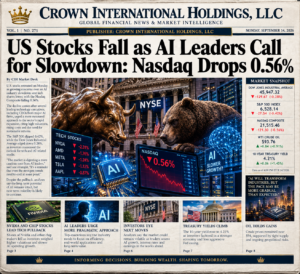
U.S. stocks closed lower on Thursday, September 10, 2026, with all three major indexes extending their losing streak as surging oil prices and rising Treasury yields rattled investor confidence.
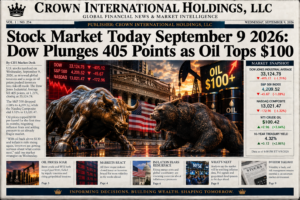
The S&P 500 fell 0.48% to close at 7,636.36, while the Dow Jones Industrial Average dropped 0.77%, or 405 points, to settle at 52,380.66 . The tech-heavy Nasdaq Composite lost 0.64% to end at 26,253.34 .
Major Index Performance Today
| Index | Close | Change | % Change |
|---|---|---|---|
| S&P 500 | 7,636.36 | -37.16 | -0.48% |
| Dow Jones Industrial Average | 52,380.66 | -405.41 | -0.77% |
| Nasdaq Composite | 26,253.34 | -168.07 | -0.64% |
The CBOE Volatility Index (VIX), often called Wall Street’s “fear gauge,” rose 4.77% to close at 16.47, signaling heightened market anxiety . This marked the third consecutive session of losses for all three major indexes .
What’s Driving the Market Sell-Off?
Oil Prices Surge Above $100 per Barrel
Crude oil prices surged to four-month highs as geopolitical tensions escalated in the Middle East. Brent crude jumped 2.7% to approximately $105 per barrel, while West Texas Intermediate (WTI) crude crossed the $100 mark . The rise followed reports of U.S. military strikes on oil tankers in the Strait of Hormuz, raising fears of potential disruptions to global oil supplies .
Higher oil prices directly impact transportation costs, business operations, and consumer prices, fueling concerns that inflation could reignite and complicate the Federal Reserve’s monetary policy decisions .
Treasury Yields Hit Multi-Year Highs
The 10-year U.S. Treasury yield climbed to 4.92%, its highest level since October 2023, while the 30-year Treasury yield rose to 5.35% . The 2-year Treasury yield also surged to 4.52% .
Rising bond yields make fixed-income investments more attractive relative to stocks, pressuring equity valuations, particularly for rate-sensitive sectors like technology . The yield surge persisted even after the U.S. Treasury announced a $6 billion bond buyback program aimed at stabilizing the bond market .
Fed Rate Hike Fears Intensify
Traders are increasingly pricing in the possibility of a Federal Reserve rate hike at the central bank’s September meeting. Following the release of August Producer Price Index (PPI) data, the probability of a rate hike rose to approximately 70%, up from 60% earlier .
The PPI report showed wholesale prices rose 5.4% year-over-year in August, exceeding economists’ expectations of 5.3% and accelerating from July’s revised 4.8% increase . This stronger-than-expected inflation data suggests upstream cost pressures remain persistent and could eventually pass through to consumer prices.
Sector and Stock Highlights
Energy Sector Outperforms
The energy sector was the only major sector to post gains, rising approximately 1.1% as oil prices climbed . Higher crude prices directly benefit oil producers and energy companies.
Technology Stocks Under Pressure
Rising Treasury yields weighed heavily on technology and growth stocks, which are particularly sensitive to interest rate changes. Among the “Magnificent Seven” tech giants, most declined:
- NVIDIA: Fell over 2%
- Meta Platforms: Declined over 1%
- Alphabet, Microsoft, Amazon: Each dropped approximately 1.4%
Semiconductor stocks experienced broad declines, with the Philadelphia Semiconductor Index dropping over 3%. Intel and Lam Research each fell more than 5%, while Arm and KLA dropped over 4% .
Apple Bucks the Trend
Apple Inc. shares surged over 2% following the company’s announcement of the new iPhone 18 Pro and Pro Max series on Wednesday . The product launch provided a rare bright spot amid the broader market decline.
What’s Next for Investors?
Consumer Price Index (CPI) Report
Investors are closely watching Friday’s Consumer Price Index report, which will provide critical insights into consumer-level inflation trends and potentially influence the Federal Reserve’s interest rate decision at its September 15-16 meeting .
According to analysts at Brown Brothers Harriman & Co., “If the CPI data comes in hot, it’s almost certain the Fed will hike rates in September, supporting a stronger dollar; if it’s cooler, it would reinforce expectations for a rate pause” .
Federal Reserve Meeting
The Federal Open Market Committee meets September 15-16, with markets increasingly expecting a potential rate hike rather than a cut. KPMG Economics forecasts a quarter-point increase at this meeting and another in December, citing persistent tariff-related price pressures and elevated oil prices .
Key Levels to Watch
The S&P 500 closed within 1% of its 50-day moving average, a level it hasn’t breached on a closing basis since May . The Nasdaq Composite is testing the 21,400 area that marked its July breakout. A close below these technical levels could signal further downside momentum .
Frequently Asked Questions
Why did the stock market fall today?
The market declined due to three primary factors: oil prices surging above $100 per barrel amid Middle East tensions, Treasury yields reaching multi-year highs, and stronger-than-expected wholesale inflation data increasing the likelihood of a Federal Reserve rate hike .
What is the VIX and why does it matter?
The VIX, or CBOE Volatility Index, measures expected market volatility over the next 30 days. Often called the “fear gauge,” it rises when investors are nervous. Today’s 4.77% increase to 16.47 indicates elevated market anxiety .
How are rising Treasury yields affecting stocks?
When Treasury yields rise, bonds become more attractive relative to stocks because investors can earn higher risk-free returns. This prompts investors to demand higher expected returns from equities, particularly growth stocks whose valuations depend heavily on future earnings .
Which sectors performed best and worst today?
Energy was the only sector to gain, rising approximately 1.1%, while technology and consumer discretionary sectors faced the steepest declines due to their sensitivity to rising interest rates .
What should investors watch for tomorrow?
Friday’s Consumer Price Index (CPI) report is the key event. A higher-than-expected reading could cement expectations for a September rate hike, while a cooler reading might provide relief to markets .
Disclaimer
This article is for informational and educational purposes only and does not constitute financial, investment, tax, or legal advice.