Fed Raises Interest Rates: What the First Hike Since 2023 Means for Your Wallet and the Markets
Fed Raises Interest Rates: What the First Hike Since 2023 Means for Your Wallet and the Markets
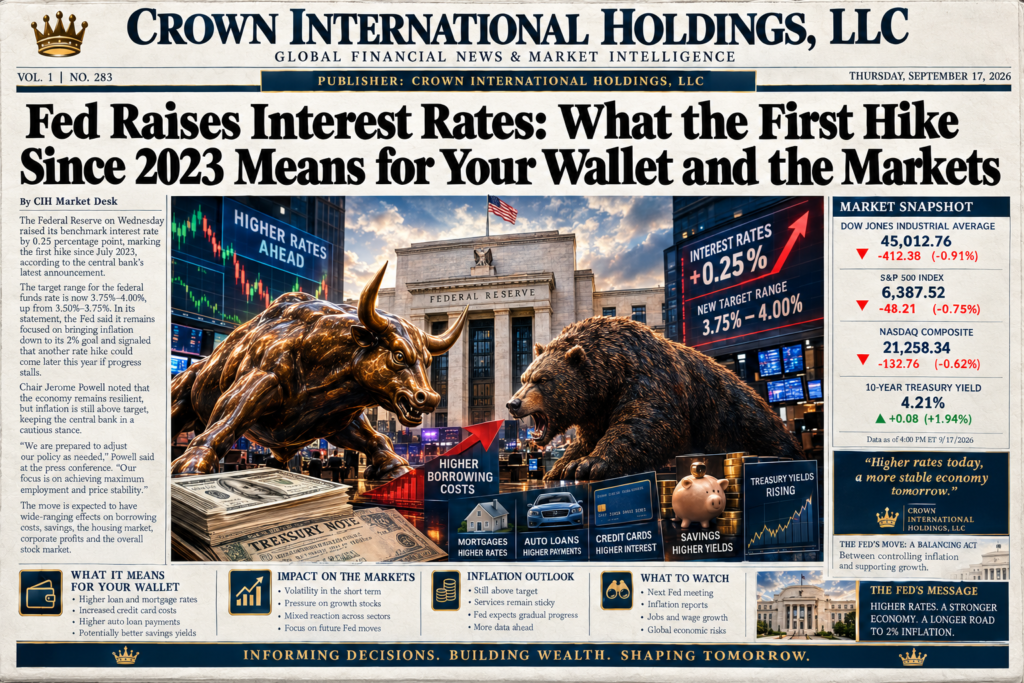
The Federal Reserve raised its benchmark interest rate by 25 basis points on Wednesday, lifting the federal funds rate to a target range of 3.75% to 4.00%. It marks the first rate hike since July 2023 and signals a decisive shift in monetary policy as officials confront stubbornly high inflation.
The decision was unanimous, with all 12 voting members of the Federal Open Market Committee supporting the move. Fed Chair Kevin Warsh delivered a blunt assessment: “The plain fact is that inflation is too high and has been for too long”.
Why the Fed Hiked Now
The rate increase was driven by three converging pressures:
Inflation remains well above target. The Fed’s preferred inflation gauge, the personal consumption expenditures (PCE) price index, rose 3.7% year-over-year in August — far above the central bank’s 2% goal. Inflation has now exceeded target for more than five years.
Energy prices are surging. The ongoing conflict with Iran has disrupted global oil supplies, pushing crude prices back above $100 per barrel. Warsh acknowledged the Fed cannot control oil prices directly but stressed the committee must prevent those price shocks from spreading through the broader economy.
The economy is holding up. Economic activity continues to expand at a solid pace, and the labor market remains stable. The Fed raised its 2026 GDP growth forecast to 2.3% from 2.2%, reinforcing the case that the economy can absorb higher rates.
What the Fed Signaled Next
The updated “dot plot” — the Fed’s projections for future rate moves — pointed to at least one more hike before the end of 2026. The median projection for the federal funds rate at year-end came in at 4.1%, implying an additional 25-basis-point increase. Twelve of 18 officials who submitted projections favored at least one more hike, while four supported two more.
Warsh declined to offer forward guidance, saying the Fed “will not prejudge any future decisions.” But the unanimous vote and hawkish projections sent a clear message: the committee is aligned on prioritizing price stability.
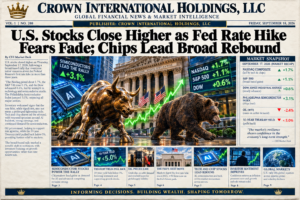
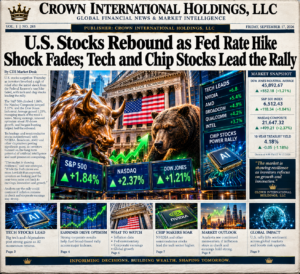
Market Reaction: A Sell-Off on Hawkish Signals
The rate hike itself was widely anticipated — futures markets had priced in roughly 90% odds beforehand. What rattled investors was the prospect of higher rates for longer.
| Asset | Reaction |
|---|---|
| Dow Jones Industrial Average | Fell more than 600 points (1.2%) |
| S&P 500 | Declined 0.5% |
| Nasdaq Composite | Slightly lower |
| 10-Year Treasury Yield | Rose above 5% |
| US Dollar Index | Gained 0.6% to 100.21 |
The sell-off accelerated during Warsh’s press conference as investors digested the possibility of a sustained tightening cycle rather than a one-and-done move.
Peter Boockvar, chief investment officer at OnePoint BFG Wealth Partners, noted that the bond market had already been adjusting rates before the Fed acted: “The bond market adjusted interest rates first and all the Fed did was follow”.
What It Means for Your Money
Credit cards and variable-rate debt. These are the fastest to feel the impact. Credit card rates are pegged to the prime rate, which tracks the federal funds rate. A quarter-point increase adds roughly **$1.38 per month** in interest on the average $6,600 credit card balance, according to TransUnion. For those carrying larger balances, the cost compounds over time.
Auto loans. Less directly affected, since auto loan rates tend to follow longer-term market rates. Cox Automotive estimates the full quarter-point pass-through would add about **$6 per month** to a new-car payment and $4 to a used-car payment.
Mortgages. The Fed does not set mortgage rates directly. Thirty-year fixed mortgage rates track the 10-year Treasury yield, which was already hovering around 5% before the decision. Mortgage rates have climbed to their highest level in over a year, averaging 6.76% as of mid-September. Shopping around for lenders becomes even more critical in this environment.
Home equity lines of credit (HELOCs). These typically have variable rates tied to the prime rate, so they will become more expensive. A 0.25% increase in the prime rate could translate into an additional $1.15 billion in annual payments for homeowners with HELOCs, though not all HELOCs have variable rates.
Savings. The one bright spot: yields on CDs, money market accounts, and high-yield savings accounts are likely to rise further, offering better returns for savers.
The Political Dimension
The rate hike puts the Fed on a collision course with the White House. President Donald Trump has repeatedly called for lower rates, posting after the decision that US rates “should be 1% or lower”. Warsh, who was appointed by Trump, was asked about the pressure and responded: “Part of the Federal Reserve System’s independence lies in staying in our lane”.
What Comes Next
The Fed’s next meeting is in late October, but most economists expect the central bank to hold steady then — just one week before the midterm elections. The December meeting is widely seen as the more likely venue for another hike.
For investors, UBS offered historical context: looking at 16 hiking cycles since 1954, the S&P 500 gained an average of 10.8% in the year following the first rate increase. The message: the first hike of a cycle is not necessarily a sell signal, but the path ahead depends heavily on whether inflation finally begins to cool.
Disclaimer: This article is provided for informational and educational purposes only and does not constitute financial, investment, legal, or tax advice. The views expressed are those of the author and do not necessarily reflect the opinions of any financial institution. While every effort has been made to ensure accuracy, the author makes no representations or warranties regarding the completeness or reliability of the information presented. Economic conditions, interest rates, and market data are subject to change and may differ from the figures cited here. Readers should consult a qualified financial advisor, accountant, or attorney before making any financial decisions. Investing involves risk, including the possible loss of principal. Past performance is not indicative of future results. The author and publisher disclaim any liability for any loss or damage arising from reliance on the information contained in this article.